THINK ABOUTIT CLOSE ENCOUNTER REPORT
Date: 1598
Sighting Time:
Day/Night:
Location: Trei-Gruinard, Scotland
Urban or Rural: –
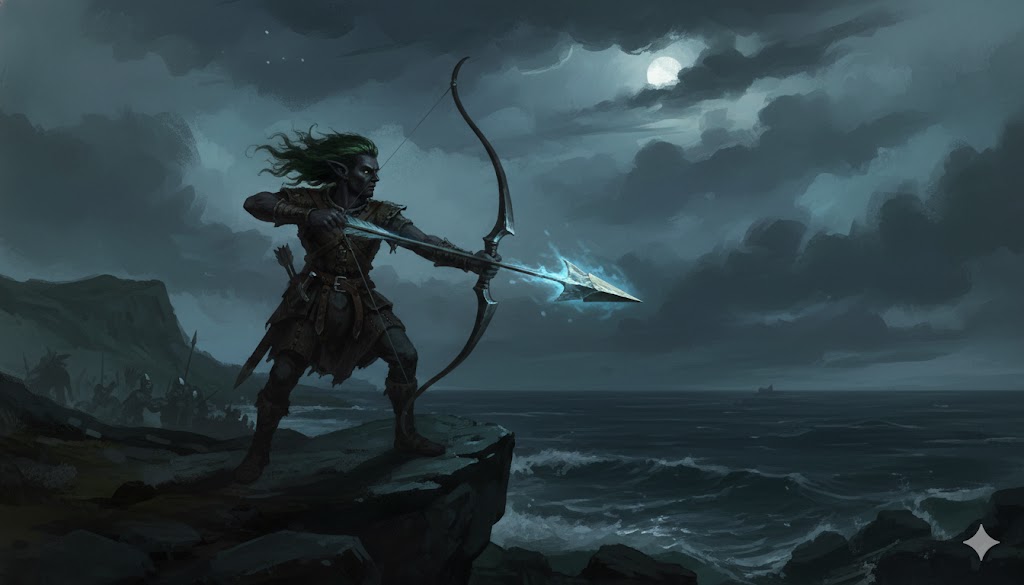
Entity Type: a little man called Du-Sith (Black Elf)
Entity Description: He killed the opponent with an arrow considered an Elf-bolt
Hynek Classification: CE-III (Close Encounter III) Close observation with animate beings associated with the object.
Duration:
No. of Object(s): 1
Size of Object(s):
Distance to Object(s):
Shape of Object(s):
Color of Object(s):
Number of Witnesses:
Source: ASSAP, quoting Gardner
Summary/Description: Before the battle at Trei-Gruinard, a little man called Du-Sith (Black Elf) was hired, who was generally believed to be one of the Good Folk. He killed the opponent with an arrow considered an Elf-bolt
Historical Context: The Battle of Gruinard and Du-Sith
The account of Du-Sith, the “Black Elf,” is set against the backdrop of the fierce clan rivalries in late 16th-century Scotland. The encounter is traditionally linked to the Battle of Traigh Ghruinneart on the Isle of Islay, where the MacLeans and MacDonalds fought for control of the Rhinns of Islay.
The Legend of the Elf-Bolt
-
The “Black Elf” as a Hired Mercenary: According to the report, Du-Sith was hired before the battle began, with witnesses generally believing him to be a member of the “Good Folk” or Aos Sí.
-
The Fatal Shot: The most famous aspect of this CE-III event is Du-Sith’s use of an Elf-bolt—a projectile believed to be supernatural in origin—to kill Sir Lachlan Mor MacLean.
-
Supernatural Arsenal: In historical folklore, “Elf-bolts” were often identified as Neolithic flint arrowheads found in the Scottish soil, which locals believed were shot by spirits to cause sudden illness or death in cattle and men.
Modern Anomalous Interpretation
From a modern anomalous research perspective, the description of a “little man” with advanced weaponry interacting directly with a historical conflict places this firmly in the category of early Close Encounters of the Third Kind. The consistency of the “Elf-bolt” description suggests a physical object that left a lasting impression on the survivors of the battle.