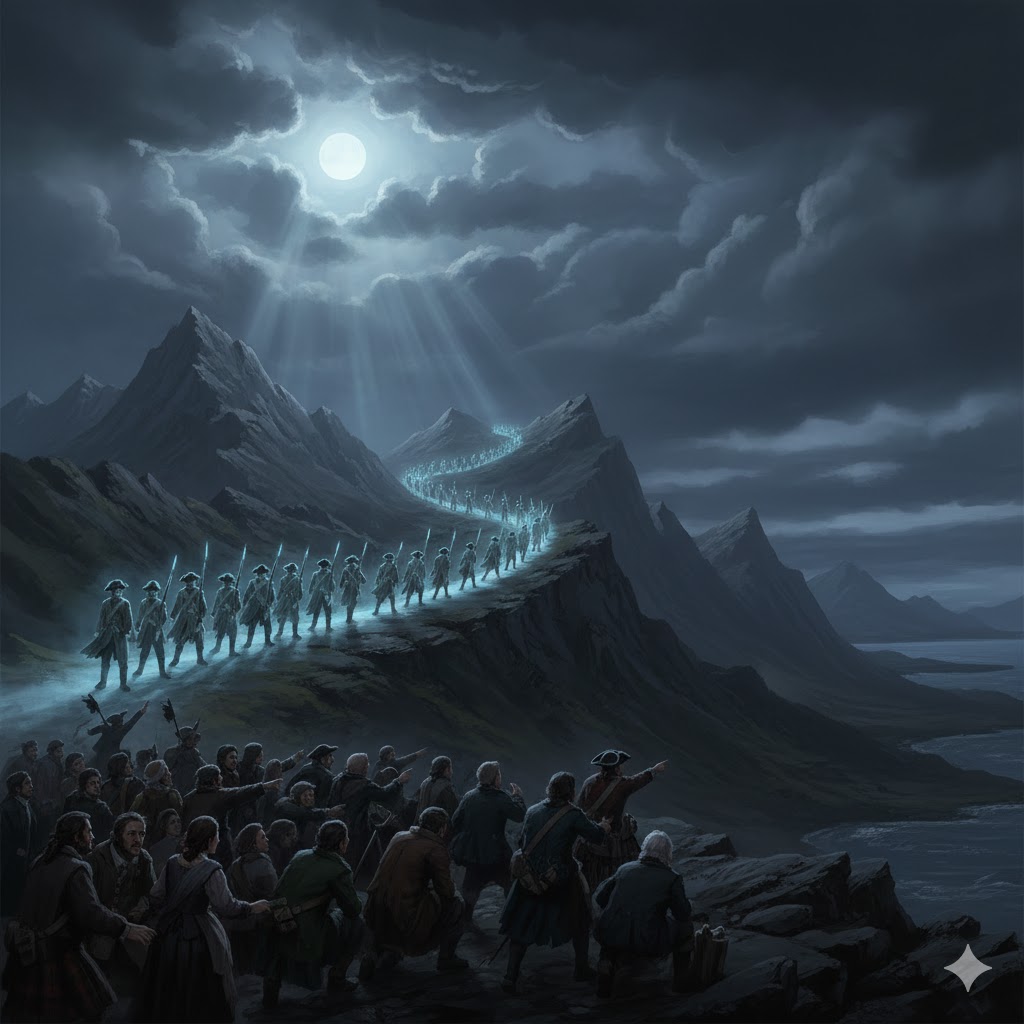
THINK ABOUTIT UFO SIGHTING REPORT
Date: June 23 1744
Sighting Time:
Day/Night: dusk
Location: Knott, Scotland
Urban or Rural: –
Entity Type: troops of aerial soldiers
Entity Description:
Hynek Classification: CE-III (Close Encounter III) Close observation with animate beings associated with the object.
Duration: two hours
No. of Object(s): troops
Size of Object(s):
Distance to Object(s):
Shape of Object(s):
Color of Object(s):
Number of Witnesses: 26
Source: T Peter Park, The Anomalist # 10
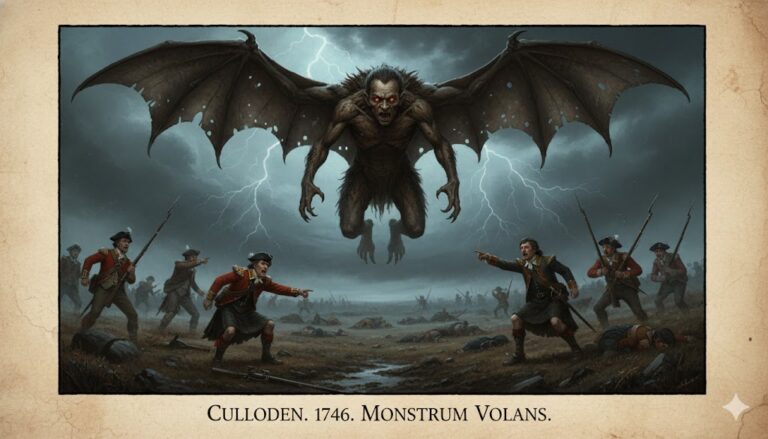
Summary/Description: Some 26 witnesses saw troops of aerial soldiers marching for two hours on and over a mountain in Scotland. Disappearing at dusk.
Historical Context: The Spectral Army of Knott
The 1744 sighting at Knott is a classic example of a “spectral army” phenomenon, a type of CE-III encounter frequently recorded in Scottish and English history. On the evening of June 23, 1744, approximately 26 witnesses observed a massive body of troops marching across a mountain for two continuous hours. Unlike typical military drills, these soldiers appeared to move with a rhythmic, ethereal quality that defied conventional explanation at the time.
Witness Testimony and Credibility
The report, as cited by T Peter Park in The Anomalist #10, highlights the collective nature of the experience:
-
Consistency: All 26 witnesses provided corroborating details regarding the “aerial” nature of the soldiers and their disappearance at dusk.
-
Duration: The sighting lasted for two hours, ruling out quick atmospheric mirages or momentary optical illusions.
-
Cultural Impact: In 18th-century Scotland, such sightings were often viewed as omens of impending war or major social upheaval, though modern anomalous researchers often categorize them as early atmospheric projections or unidentified entity manifestations.
Analysis: The Spectral Army Phenomenon
The 1744 event at Knott, Scotland, is part of a broader historical pattern of “spectral armies” reported throughout the 0 C.E.- 1799 period. These sightings often share several unique characteristics that distinguish them from standard meteorological anomalies:
Characteristics of 18th-Century Aerial Troops
-
Mass Participation: Unlike typical CE-III encounters involving a single witness, the Knott incident involved 26 people, adding a high level of corroboration to the report.
-
Geographic Specificity: These armies were almost always seen marching over mountainous terrain or ridgelines, leading some modern researchers to theorize they may be rare atmospheric reflections or “Fata Morgana” mirages.
-
Behavioral Intelligence: Witnesses frequently described the troops as following military orders or reacting to the environment, which challenges the simple mirage theory and suggests an interactive, animate presence.
Historical Significance
In the context of Scottish history, 1744 was a time of immense political tension just prior to the Jacobite rising of 1745. Consequently, the “Aerial Soldiers” were interpreted by the local population not as extraterrestrial visitors, but as supernatural precursors to the looming physical conflict. This specific report, documented by T Peter Park, serves as a vital bridge between traditional folklore and modern anomalous research.
Modern Scientific Explanations: Atmospheric Mirages
Modern researchers often look toward rare meteorological phenomena to explain historical accounts of spectral armies. While the 26 witnesses at Knott interpreted the figures as aerial soldiers, science offers a few compelling alternatives:
Fata Morgana and Superior Mirages
-
The Reflection Theory: A Fata Morgana is a complex form of superior mirage that occurs when a layer of warm air sits above a layer of much colder air (a temperature inversion).
-
Magnification: This atmospheric “duct” can act as a refracting lens, magnifying distant objects—such as a real group of soldiers marching miles away—and projecting them onto the sky or mountain ridges.
-
Historical Fit: The two-hour duration mentioned in the 1744 report is consistent with stable temperature inversions that can occur at dusk in mountainous regions of Scotland.
Limitations of the Mirage Theory
-
Animate Behavior: Critics of the mirage theory point out that the witnesses described the troops as “marching for two hours” with rhythmic, intentional movements.
-
Corroboration: While a mirage might explain a hazy image, the CE-III classification suggests a level of detail and animate presence that continues to baffle those looking for a purely physical explanation.