THINK ABOUTIT ENTITY ENCOUNTER REPORT
Date: September 5, 1952
Sighting Time:
Day/Night:
Location: Weston West Virginia
Urban or Rural: Rural
Hynek Classification: CE-III (Close Encounter III) Close observation with animate beings associated with the object.
Duration:
No. of Object(s):
Size of Object(s):
Distance to Object(s):
Shape of Object(s):
Color of Object(s):
Number of Witnesses: Several
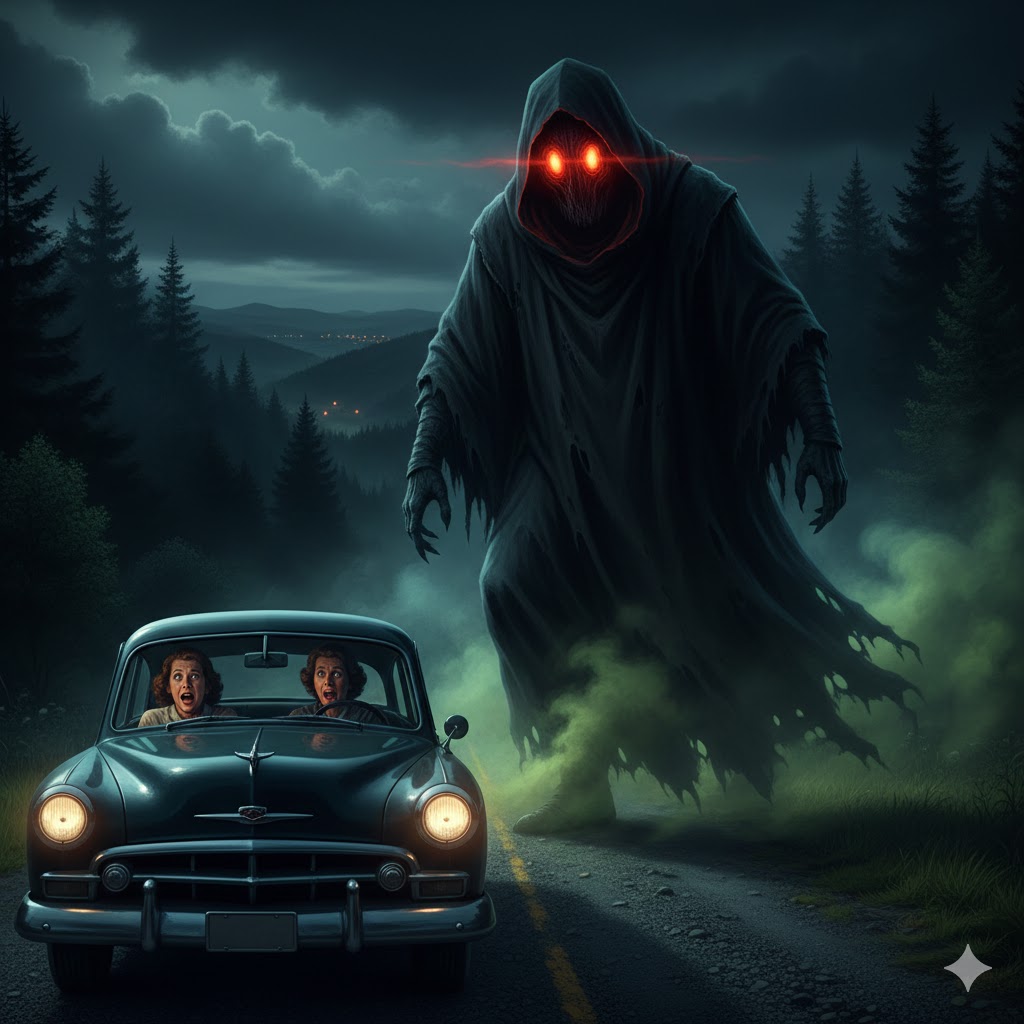
Special Characteristics: a huge humanoid figure with blazing eyes that appeared to be cloaked in black and glide above the ground
Source: Jerome Clark, Unexplained!
Summary/Description: The incident in Weston, West Virginia, occurring on September 5, 1952, is often cited as a precursor to the famous Flatwoods Monster sighting that would take place just a week later in the same region. The primary witnesses were a woman and her mother who were driving along a rural road toward a local church when their journey was interrupted by a truly harrowing sight.
According to the report, they encountered a massive humanoid figure that appeared to be roughly eight to nine feet tall. The entity was described as being “cloaked in black,” with its most terrifying feature being two large, blazing eyes that glowed with an internal intensity. Unlike a human, the creature did not walk; instead, it appeared to glide silently just above the ground’s surface, a movement often associated with high-strangeness CE-III encounters.
As the vehicle approached, the witnesses were overwhelmed by a powerful and nauseating odor—a foul, sulfuric smell that is a common calling card in many 1952 West Virginia entity reports. The psychological impact of the encounter was immediate and severe; one of the women was so profoundly affected that she had to be hospitalized shortly after for treatment of severe shock.
Historical Significance and Patterns
This case is a cornerstone of the 1952 sightings wave that gripped the United States, specifically the “Braxton County Monster” phenomenon. The description provided by the Weston witnesses—the glowing eyes, the gliding motion, and the physical sickness caused by proximity—matches almost exactly with the descriptions later given by witnesses in Flatwoods.
Researchers, including Jerome Clark in his work Unexplained!, have pointed to this case as evidence of a persistent presence in the Appalachian region during the early 1950s. The fact that multiple witnesses reported similar “impossible” physical characteristics suggests that the Weston West Virginia creature was part of a larger, unexplained aerial and terrestrial event that continues to fascinate UFO researchers and cryptozoologists today.
The encounter in Weston serves as a chilling reminder of the concentrated nature of the 1952 sightings wave. By analyzing this event alongside the Flatwoods Monster case, a clear pattern of “high strangeness” emerges, characterized by entities that defy biological classification and produce profound physiological effects on witnesses. As we continue to archive these West Virginia reports, the Weston creature remains a critical piece of the puzzle in understanding the physical and psychological toll of CE-III encounters. Whether these beings were terrestrial anomalies or visitors from elsewhere, their impact on the small communities of the Appalachian trail remains undeniable decades later.