THINK ABOUTIT SIGHTING REPORT
Date: October 21, 1963
Sighting Time: Night (post-dinner)
Day/Night: afternoon
Location: Trancas, Argentina
Urban or Rural: rural
No. of Entity(‘s): Multiple silhouettes
Entity Type: Humanoid silhouettes
Entity Description: Witnesses observed arms, legs, and heads visible within a “tube” of light.
Hynek Classification: CE-IV (Close Encounter IV) Abduction of the witness or other direct contact
Duration: Approximately 45 minutes
No. of Object(s): 1
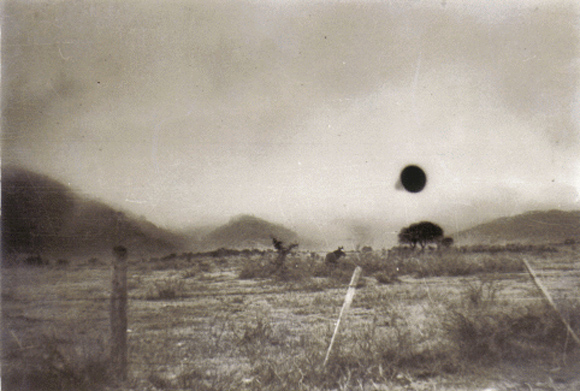
Height & Speed: The craft took off “like a spinning top” and slid 80 degrees to the north.
Size of Object(s): 30 feet (9 meters) wide
Distance to Object(s): Only meters away from the family farm
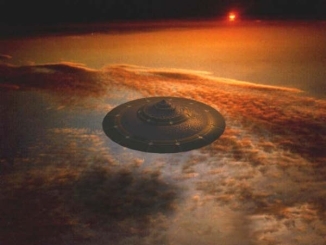
Shape of Object(s): disc-shaped, domed object, six brightly lit windows
Color of Object(s): metallic in appearance, it had a number of sections that were joined together with rivets and seams. The dome was also metallic, but it was darker and had no rivets.
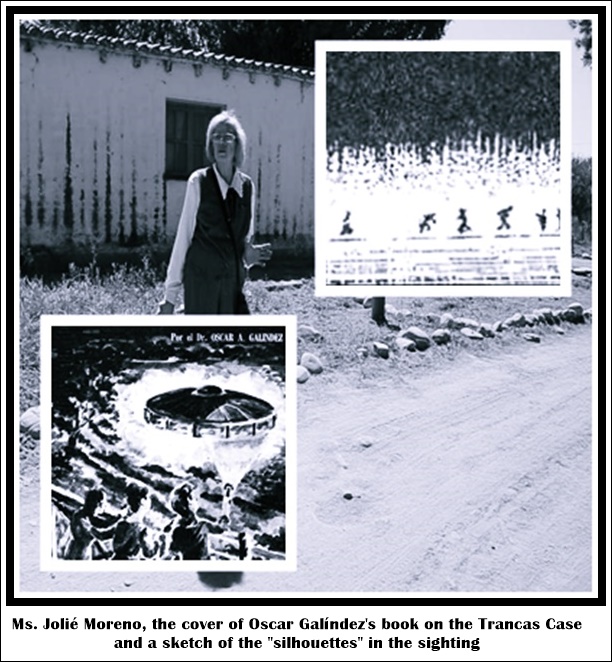
Number of Witnesses: Jolié Moreno (age 21 at the time) and her sister Yolanda witnessed lights over railroad tracks and silhouettes of figures.
Source: Jolié Moreno (witness) and the Universidad Nacional de Tucuman (UNT) investigation
Summary/Description: Jolié Moreno is the only living witness to the event, and remembers it all in spite of being 77. It was very cold that night. “Much too cold for October,” says the woman, who was 21 years old at the time. Dora Guzmán, one of the family’s maidservants, was about to wash the dishes after dinner and changed her mind, on account of the “strange lights outside the kitchen.” It was then that Jolié’s sister, Yolanda Moreno, who was asleep, woke up, threw on a robe, grabbed a .38 Colt and went outside the house with the servant to open the gate which led to the farm.
Strange lights were visible over the Belgrano railroad tracks, only meters away, looking like “when a fluorescent bulb has gone out,” Moreno explained. “There was a tube covering the entire track, and you could see the silhouettes of people walking from one light to another. The silhouettes could have been our own. One could see arms, legs and heads in the distance.” Later, she said that when her sister wanted to turn on the flashlight to open the gate, a light “like flamethrower” knocked her and the servant to the ground, inflicting “first, second and third degree burns” to the servants face. “The gun wound up in the garden and my sister ran into the house, frantically screaming ‘mother, father! Wake up! We don’t know what’s going on!’,” Jolié recalls. The flying saucer that was near the garden and the ones on the track took off like a spinning top, she explained. “The siege lasted more or less 45 minutes. Then they issued another light that reached as far as Trancas. They went up, slid 80 degrees to the north, and that was the sign of their retreat to the Sierras de Medina, which were illuminated for two hours,” she explained.
One of the country’s most notorious UFO sightings occurred in Tucumán. The incident took place at the ranch of the Moreno family only kilometers away from Trancas. According to their story, they witnessed the descent of flying objects from the night sky on October 21, 1963 over the General Belgrano Railroad Line located only a few meters from the family farm. The craft emitted lights until they rose into the air anew and vanished in the direction of the Sierra de Medina. The event was investigated by the Universidad Nacional de Tucuman (UNT) and served as the inspiration for one of the scenes in Steven Spielberg’s Close Encounters of the Third Kind.
Technical Summary
The Trancas, Argentina sighting is a rare case where physical evidence—first, second, and third-degree burns—was documented on a witness. The metallic description of the craft, featuring visible rivets and seams, along with the “flamethrower-like” beam, marks it as a high-strangeness event that transcends typical light-only sightings.
The Trancas Case: The Inspiration for Close Encounters
The 1963 Trancas, Argentina sighting holds a legendary place in cinema history as a primary inspiration for Steven Spielberg’s 1977 masterpiece, Close Encounters of the Third Kind. Spielberg, known for his meticulous research into real-world UFO cases, was reportedly fascinated by the aggressive nature of the Trancas encounter—specifically the “siege” of the Moreno family ranch.
The most direct parallel can be found in the famous “farmhouse siege” scene in the film, where a young boy is nearly abducted while his house is bombarded by blinding lights and overwhelming physical forces. The real-world account of Jolié Moreno—describing a “tube” of light that illuminated the entire area and a “flamethrower-like” beam that caused third-degree burns—provided the cinematic blueprint for the intense, terrifying atmosphere Spielberg sought to capture.
Furthermore, the metallic description of the craft, complete with rivets and seams, stood out to researchers and filmmakers alike because it moved away from the sleek, polished “saucer” tropes of the 1950s. It presented a gritty, mechanical reality that anchored the phenomenon in a physical, albeit terrifying, space—a hallmark of Spielberg’s approach to the genre. By documenting this connection, the Tucumán case is elevated from a local mystery to a cornerstone of modern science fiction mythology.
On October 21, 1963, a remarkable close encounter occurred at the Moreno family ranch near Trancas, Argentina, involving multiple disc-shaped objects observed over the Belgrano railroad tracks. The primary witness, Jolié Moreno, along with her sister Yolanda and a family servant, described seeing humanoid silhouettes within a “tube” of light before being struck by a powerful “flamethrower-like” beam that caused serious physical burns. This CE-IV encounter, characterized by its metallic craft with visible rivets and intense luminous displays, was later investigated by the Universidad Nacional de Tucuman (UNT) and cited as a key inspiration for a scene in Steven Spielberg’s Close Encounters of the Third Kind.