THINK ABOUTIT ABDUCTION REPORT
Date: 1516
Sighting Time: Unknown
Day/Night: Unknown
Location: Ozarks Region
Urban or Rural: Rural
Entity Type: “Malacosa” or Mr. “Bad Thing” – bearded” character of unusual aspect.
Entity Description: Even though bearded his facial features were “never seen clearly” or where otherwise indistinct or else clouded by a mist.
Hynek Classification: CE-III (Close Encounter III) Close observation with animate beings associated with the object.
Duration: Unknown
No. of Object(s): 1
Size of Object(s): Unknown
Distance to Object(s): Unknown
Shape of Object(s): Unknown
Color of Object(s): Unknown
Number of Witnesses: Many
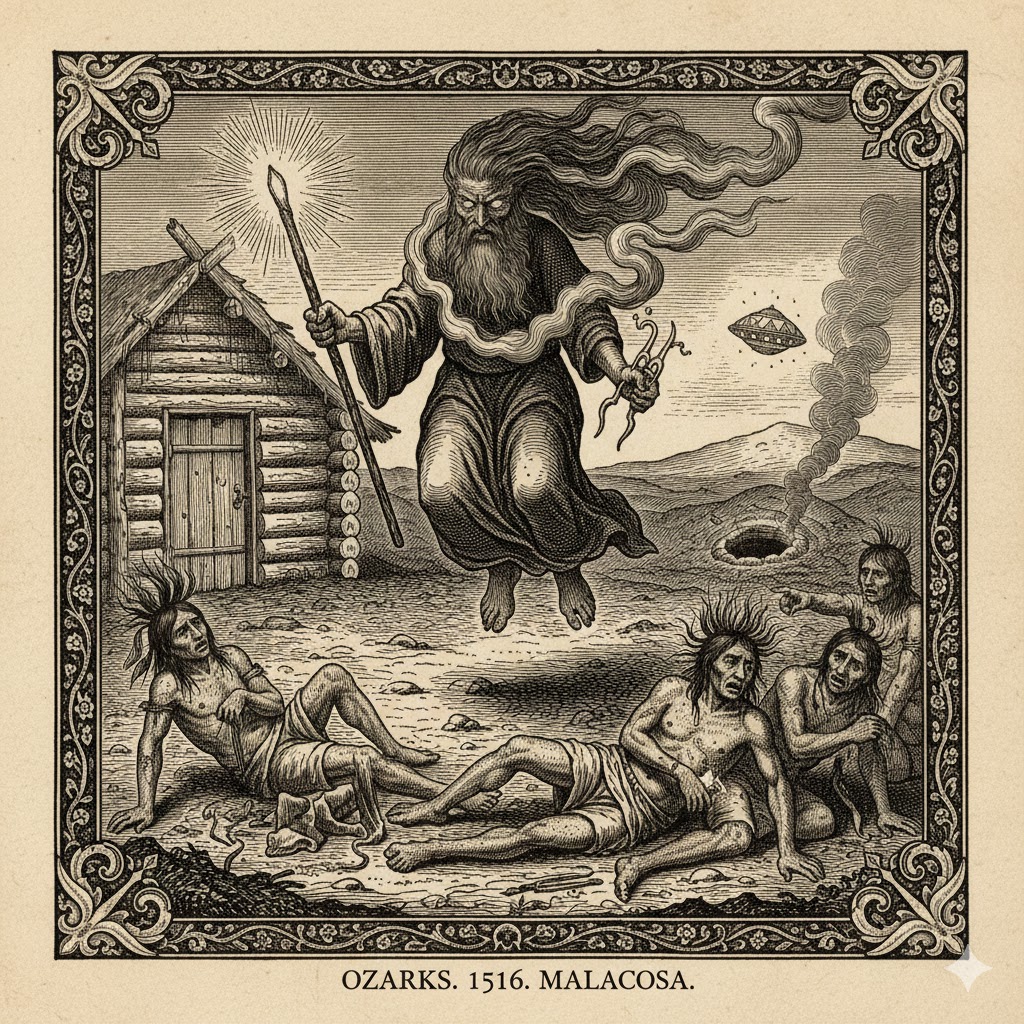
Special Features/Characteristics: they inquired as to his place of origin, and “Malacosa” pointed to a nearby “hole” on the ground and told them that his home was there, in the regions below
Source: Michael Mott, Entities, Electromagnetism and EMP’s
Summary/Description: In the 1530s and 40s, the Spaniard Cabeza de Vaca and his Conquistadores followed the Mississippi River and came in contact with various Native American tribes of varying dispositions. Upon befriending the Avavares further westward they were told a most unusual tale.
According to the Indians, approximately sixteen years earlier the region had been visited by another “bearded” character of unusual aspect. This fellow was called by the Indians “Malacosa” or Mr. “Bad Thing” (according to the Spaniards) an accurate appellation given his proclivities. Even though bearded his facial features were “never seen clearly” or where otherwise indistinct or else clouded by a mist. This character “invaded” Indian homes by night, accompanied by a light and an electrical sensation that would make the hair of the inhabitants “stand on end.” Apparently paralyzed, the poor tribes-people would stand helpless as, armed with a “blazing brand” or wand the bearded creature would rush inside and perform intrusive surgeries upon its victims. This included abdominal intrusions and taking of intestinal samples, to incisions or perhaps partial amputation of arms and legs, which would then be surgically stitched or otherwise, repaired.
The androgynous ambiguity of this creature was not lost on the Indians, for it happened that during this season of visitation, “Malacosa” would appear in the midst of their celebrations, dressed alternately as an Indian man or woman, which raises the question: Was he in a possible quest for genetic material based on seduction? The Indians offered him food but he never ate; they inquired as to his place of origin, and “Malacosa” pointed to a nearby “hole” on the ground and told them that his home was there, in the regions below. At first the Spaniards laughed at the account of the “barbarian bogey man” until the Indians brought forward numerous people who still bore the visible scars of the intrusive or amputation reattachment surgeries.
Investigative Analysis
The 1516 Ozarks account of “Malacosa” is a remarkable early instance of what modern researchers would classify as a Close Encounter of the Third Kind (CE-III) with strong abduction overtones. The description of a “blazing wand” used for intrusive surgeries and the presence of physical scars as evidence predates modern abduction lore by centuries.
Furthermore, the reported electrical sensations that made hair stand on end align perfectly with modern reports of electromagnetic interference often documented during CE-III encounters. The entity’s claim that its home was in a “hole in the ground” adds a fascinating subterranean element to the case, suggesting that the “Bad Thing” may represent a different type of non-human intelligence than the typical extraterrestrial hypothesis. This case remains a pillar of North American historical high-strangeness, bridging the gap between indigenous oral tradition and physical, documented evidence.