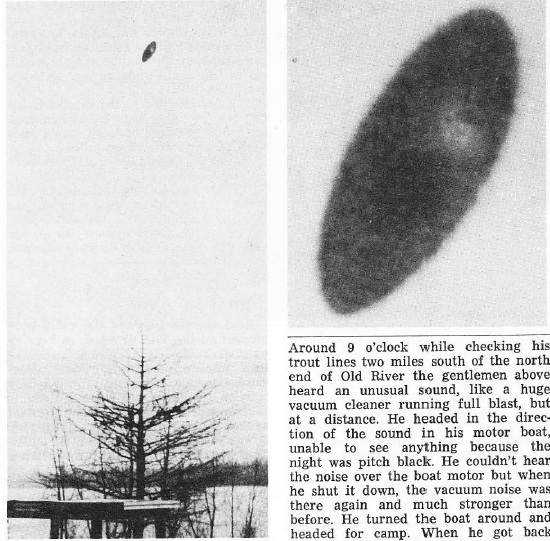
Reconstruction of the 2003 Daylight Disc encounter witnessed by an engineer flying toward New Orleans.
THINK ABOUTIT UFO SIGHTING REPORT
On August 4, 2003, at approximately 2:42 PM, a technical professional flying over the Gulf of Mexico toward New Orleans witnessed a massive, metallic object pacing the aircraft. The witness, an engineer by profession, described a 100 to 150-foot long craft with a unique “banjo” shape that exhibited rapid vibrational patterns or “waves” across its surface. This Daylight Disc (DD) encounter lasted roughly 15 seconds before the object accelerated vertically at high velocity and vanished from sight.
Date: August 4, 2003
Sighting Time: 2:42 PM
Day/Night: Daytime
Location: Gulf Of Mexico, Louisiana
Urban or Rural: entering US by New Orleans
Hynek Classification: DD (Daylight Disc) Metallic or whitish object seen in the day.
Duration: 10 to 15 seconds
No. of Object(s): Single
Size of Object(s): 100 to 150 feet long
Distance to Object(s): 50 to 600 feet
Shape of Object(s): Banjo shape
Color of Object(s): silver with ultra white and red lights
Number of Witnesses: 1
Source: J.S. / UFOEvidence.org,
Summary: “Watching clouds on airplane window, notice a large object moving next to airplane almost same speed. I took my camera and take a picture and soon as possible, suddenly moved upward and when out of sight.”
Full Report

FULL DESCRIPTION & DETAILS:
Watching clouds on airplane window, notice a large object moving next to airplane almost same speed. I took my camera and take a picture and soon as possible, suddenly moved upward and when out of sight
It look like vibrates or waves very fast
PERSONAL BACKGROUND:
Engineer
Reported Sighting? No
Location: Cancun
Age: 45
Historical Context: Maritime Anomalies in the Gulf
The 2003 “banjo-shaped” sighting occurs within one of the most active geographic corridors for aerial and maritime anomalies. The Gulf of Mexico has long served as a focal point for high-strangeness reports, often categorized as Unidentified Submerged Objects (USOs) or Daylight Discs transitioning between mediums. Historically, sightings in this region—particularly near the oil-rich waters approaching New Orleans—mirror the technical characteristics reported by our witness.
A notable parallel can be found in the 1970s “Gulf Wave,” where commercial pilots and offshore oil rig workers reported metallic craft exhibiting the same “pacing” behavior witnessed in 2003. Unlike traditional aerospace technology, these objects frequently perform instantaneous vertical accelerations, often vanishing into the upper atmosphere or submerging without a splash. The 2003 account’s mention of “vibrations or waves” on the craft’s surface is particularly significant when compared to historical reports of “luminous halos” or “shimmering heat” often seen around craft near New Orleans and Cancun.
Furthermore, the Gulf of Mexico serves as a critical corridor for both military and commercial aviation, providing a high density of trained observers. This 2003 report joins a legacy of aviation sightings that suggest these objects take an active interest in industrial infrastructure and transit routes. By placing the “banjo” craft within this broader historical framework, it becomes clear that the event was not an isolated anomaly, but part of a persistent, multi-decade presence of highly advanced metallic objects navigating the Gulf’s airspace.
Technical Deep-Dive: The “Banjo” Morphology
While the “banjo” shape is an outlier in modern reports, it shares characteristics with “teardrop” and “ellipsoid” craft often associated with high-speed oceanic transit. The witness’s observation of “vibrations or waves” moving across the surface is a critical technical detail. This could represent a plasma sheath or a gravitational distortion field. In many aviation encounters, such visual disturbances are reported just before a craft performs high-G maneuvers that would be impossible for conventional airframes. The sudden vertical acceleration witnessed over the Gulf of Mexico suggests a propulsion system that does not rely on aerodynamic lift, but rather on the manipulation of the surrounding medium.
Researchers Notes
-
Structural Anomalies: The banjo shape is rare in modern ufology, which typically favors discs, triangles, or cigar shapes. This suggests a specialized design or a specific orientation of a more complex craft.
-
Witness Credibility: The witness’s background as an Engineer is crucial. Professionals in this field are trained in structural observation and are less likely to misidentify standard atmospheric phenomena or conventional aircraft.
-
Propulsion Indicators: The “vibrations or waves” moving over the object’s surface could indicate an electromagnetic or gravitational drive system that ionizes the surrounding air or distorts light.
-
Photographic Evidence: The existence of a photograph (reported but often difficult to verify in secondary sources) makes this a high-value DD classification case.
-
Geographic Pattern: The Gulf of Mexico and the approach to New Orleans have a long history of maritime and aerial UFO reports, possibly due to the dense oil infrastructure and military training corridors in the region.
The 2003 Gulf of Mexico sighting is a compelling example of a pilot/passenger encounter involving a high-credibility witness. While observing cloud formations from an airplane window, the witness noticed a silver object with ultra-white and red lights maintaining a parallel course at a distance estimated between 50 and 600 feet. The object’s proximity and speed synchronization suggest an intentional observation or “pacing” maneuver often reported in commercial aviation UFO encounters.
The technical description provided by the witness—an engineer aged 45—adds significant weight to the report. Beyond the unusual banjo shape, the mention of “vibrations or waves” moving very fast across the craft’s surface points to a potential propulsion signature or atmospheric distortion effect. Despite the brief duration of the event, the witness managed to capture a photograph before the object executed a sudden upward movement, leaving no visible exhaust or flight control surfaces common to conventional aerospace technology.